
|
1885: Feb. to Jan. 1894, Engels prepares volume 3 of Marx' "Capital" for printing. April 23, in a letter to Vera Zasulich, Engels writes, he is proud to know that followers of Marx' theory exist in Russia and that this is of tremendous importance for further development of revolutionary movement; Engels says a truly popular revolution is inevitable in Russia. 1886: April-May, "Die Neue Zeit" publishes Engels' "Ludwig Feuerbach and the End of Classical German Philosophy". 1887: January, The first English edition of volume 1 of Marx' "Capital", edited by Engels and containing his preface, comes out. The translation is by Samuel Moore and Edward Aveling, with participation of Eleanor Marx-Aveling. May, Engels' "Condition of Working-Class in England" appears in New York (English language). Engels edited the translation and wrote the preface, which came to be known as "Labor Movement in America". Preface was reprinted in German, French, English and USA newspapers. 1888: August 17 to Sept. 19, Engels, Karl Schorlemmer, Eleanor Marx-Aveling and Edward Aveling go on a visit to USA and Canada. Oct. to Dec., in his letter to Lafargues, Engels insists that the leaders of French Workers' Party would officially and publicly make an unconditional condemnation of Boulangism as a trend deeply hostile to the workers. 1889: Jan. to June, Engels is busy preparing an international socialist congress, corresponds with socialists in different countries. July 14, International Socialist Congress opens in Paris, is attended by delegates from 20 contries: Congress gives birth to Second International. Autumn to Summer of 1890, Engels prepares for printing of 4th German edition of volume 1 of "Capital" and writes a preface to it. Oct. to Dec., Engels helps Eleanor Marx-Aveling, Edward Aveling and other English socialists in their work among unskilled London workers. He regards their strikes and the fact that they formed new trade unions (in contrast to the old ones uniting mainly the labor aristocracy) as the start of a new stage in English working-class movement. 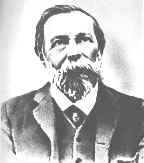
Engels in the last fewyears of his life
|
|
© Copyright Caroun.com. All rights reserved.