
|
1849: January, Engels returns to Cologne February 7, trial to "Neue Reinische Zeitung" on charges of insulting the authorities. At the trial, Marx and Engels defend their newspaper as well as freedom of the press in Germany. The jury acquits the paper. February 24, Marx and Engels take part in the banquet arranged to mark the anniversary of February Revolution in France. May, Dresden, Palatinate, Baden and Rhine Province become the scene of an armed struggle against the counter-revolution and in defense of Imperial constitution. May 10-15, Engels is in Elberfeld, where an uprising breaks out. On the instructions of Committee of Public Safety, he supervises the building of fortifications and insists on arming workers. Under pressure of local bourgeoisie, which fears Engels might proclaim a red republic, Committee of Public Safety suggests that Engels leave Elberfeld. To avoid a split among the insurgents, Engels leaves for Cologne on May 15. May 17, a warrant for the arrest of Engels is issued, for his part in Elberfeld uprising. May 19, The last, farewell issue of "Neue Reinische Zeitung" is printed in red. After its closure, Marx and Engels go to Frankfurt (am Main) and then to Southwestern Germany, where fighting still continues. They do their utmost to give the movement an all-German character, but meet with the incomprehension of its petty-bourgeois leaders. June 3, Marx goes to Paris, to establish ties with French socialists. Though major revolutionary events are expected here, an attempt to start an uprising fails. A state of siege is introduced in Paris. June 13 to July 12, Engels joins the insurgent Baden-Palatinate army as a volunteer, fights in General Willich's revolutionary corps, takes part in planning military operations and fights in four important engagements. July 12, with the insurgent Baden-Palatinate army defeated, Willich's corps is the last to cross Swiss border. July 19, Marx is expelled from Paris. Mid July to early October, while in Lausanne, Engels works on a series of essays entitled "The Campaign for the German Imperial Constitution" August 24, Marx emigrates to London, where he restores order in the work of Central Authority of Communist League and organizes a Committee of Support for German Political Refugees. October, Engels leaves Switzerland and goes to England via Italy, to join Marx. November 10, Engels arrives in London. He is elected member of the reorganized Central Authority of Communist League and is active in German Workers' Educational Society and Social-Democratic Refugee Committee. 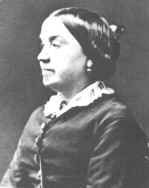
Lizzie Burns, Engels' wife
|
|
© Copyright Caroun.com. All rights reserved.