|
|
Namakdan is a container to keep and carry salt. This was mostly woven for shepherds, to take the salt needed for flock in pasture and mountain. Shepherd carries namakdan, full of salt, on his shoulder and once in a while sprinkles some of it on the rocks, next to the flock, to make those salt-lick, though he provides enough salt for them.
There is no need of shepherd namakdan in regions near Kavir (salt-earth) or places having enough salt in its grass.
Besides shepherd usage, namakdan is also used at homes. Most of tribes keep their salt in these hand woven salt containers and hang it to the corner of their tent, near to cooking place, to use in food or dough preparation. Because of the lack of mortar in tribes, they buy crushed salt either in the way or from peddlers, so they take good care of salt, as it is not commonly available.
Regardless of its usage, namakdan has always the same shape, which is made of salt storage part and pharynx (neck), to prevent wasting of salt.
Namakdan is woven in different sizes. Although there is no drastic difference, it is distinguished. Size of namakdan is related to the size of flock. Larger namakdan is woven also for shepherd taking the flock far to mountains, for weeks or months, so they will have no shortage of salt.
Most of shepherd namakdans are woven by tribe members; simply because tribal shepherds do not have the chance to buy salt from shops, so they have to carry their needed salt with themselves. Whereas, village shepherds, whose flocks are near the village during the day and go back to village at night, do not need to carry too much salt with themselves.
Shepherd namakdans are woven by tribal and villager women. In fact, their affection and feeling is quite noticeable in their namakdan, as they are woven for shepherds, who are either their children, brothers or husband.
It seems that, namakdan weavers try their best artistic skills to weave these little charming pieces, so that some are tribal art masterpieces.
Almost all of Iranian tribes, except Turkmen, have shepherd namakdan. Although those are apparently similar in size, are different in details.
Tribal namakdan of no other country is woven like Iranian ones. Despite of Turkey's old weaving tradition and variety of its tribes, no namakdan have found there. There are some namakdans woven by Caucasian, Baluch of Pakistan and Afghanistan, which are very similar to Iranian Baluch namakdan. "Hezarei" of Afghanistan wove namakdan. One made of cotton cloth with patch-work is found from Uzbek of North Bukhara, which is rare in its category.
Regions, outside present Iran's borders, Where some namakdans have been found, should also be known as part of Iranian Culture, because until last century, many of those regions were parts of Iran.
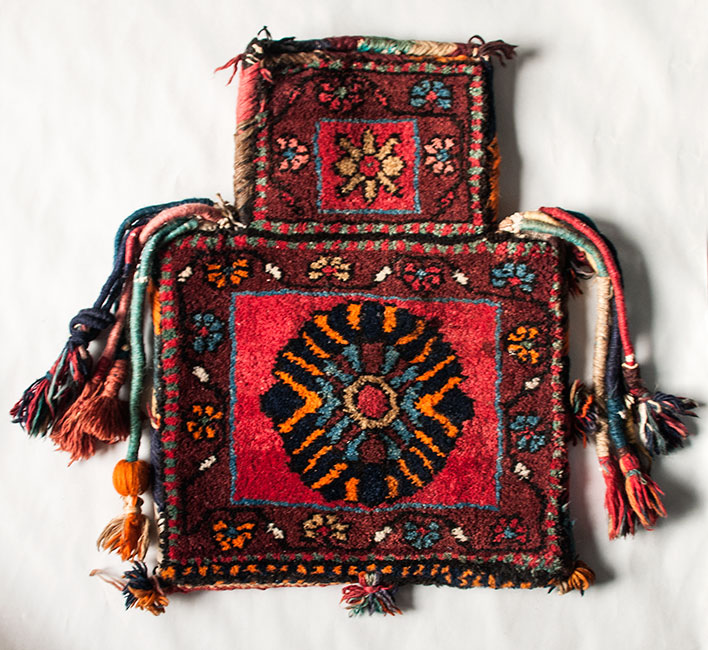
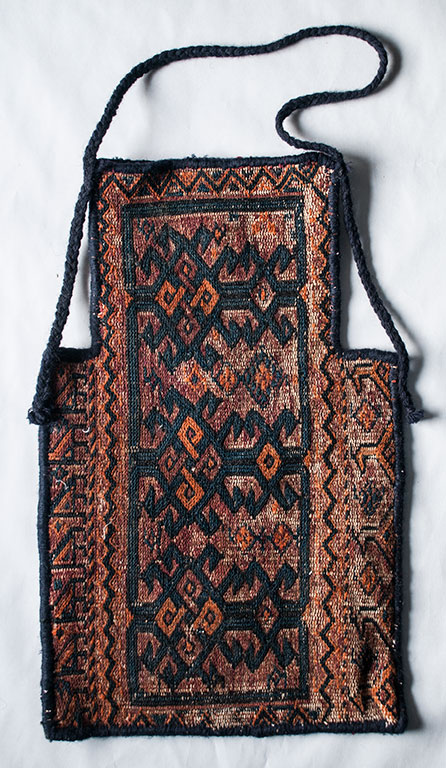
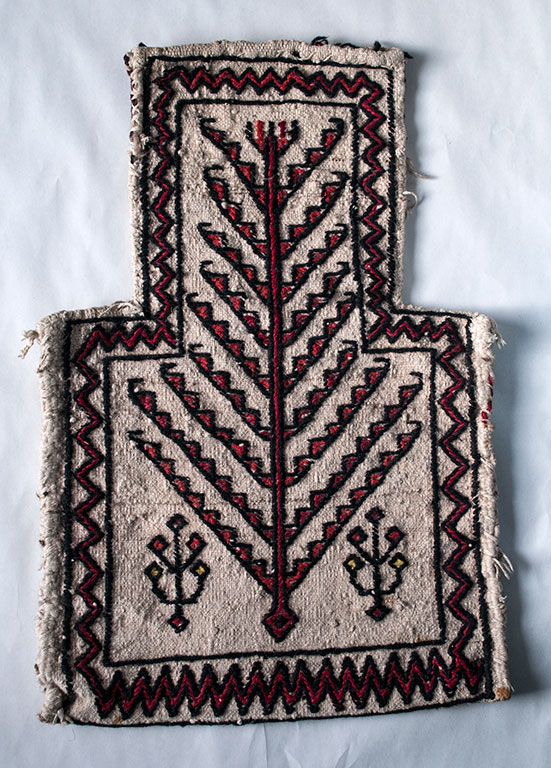
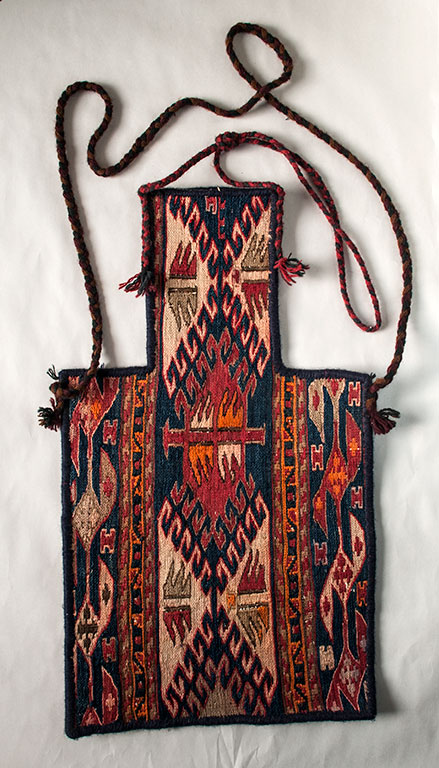
|
|