|
|
Address: Paris, Louvre Museum
Opening hours: everyday except Tuesdays and certain public holidays, 9-18
Tel: 01 40 20 53 17
Recorded information: 01 40 20 51 51
History of Louvre and Medieval Louvre
Two rooms present the history and architectural development of Louvre Palace in chronological order, from the fortress built by Philippe Auguste in about 1190 in Lupara (later to became Louvre) to recent works by I. M. Pei and other architects involved in "Grand Louvre" project. The exhibition is completed by archeological circuit through the castle's moats, from Philippe Auguste to Charles V.
Oriental Antiquities Art from Islam
This department presents the civilizations of Ancient Near-East, which goes back to 7000 BC and succeeded one another in Mesopotamia, Iran and the countries of Levant, immense territory stretching from Mediterranean to India. Islamic section includes 7th-19th century works of art from Islamic world: Mediterranean basin, Iran, India and Central Asia.
Egyptian Antiquities
Created by John Francois Champollion, this department illustrates the art of Ancient Egypt from two different viewpoints: Chronological circuit from the earliest times to Cleopatra and thematic circuit illustrating certain aspects of Egyptian civilization. Two sections devoted to Coptic Egypt and Roman Egypt complete the display.
Greek, Etruscan and Roman Antiquities
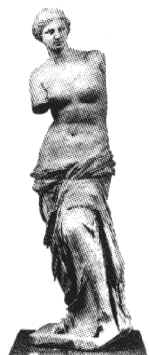
This department includes works from three ancient civilizations: Greece, Etruria and Rome. On the ground floor, chronological circuit, based on marble statuary, contains works from 3rd millennium BC to 7th century AD. The collection on the first floor is organized according to the techniques and materials used: Bronzes and jewelers, silverware, glassware, figurines and terracotta vases.
Sculptures
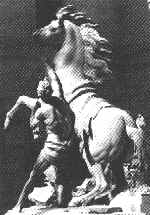
European Sculpture, from Late Middle Ages to mid-19th century, is to be found in this department. This collection, which mainly include French works, also contain many significant pieces from Italy, Spain and Northern Europe.
Artistic Objects
The collection in this department come from every era: Items from Middle Ages and Renaissance, decorative arts from 17th-18th centuries, Crown Diamonds, 19th century items and furniture, Napoleon III apartments, etc.
Paintings
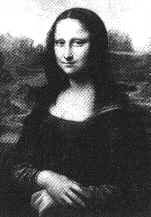
This collection covers the history of European painting from mid-13th century to mid-19th century. They are divided into three main groups: French School, which has the largest number of works, Italian and Spanish School, and Northern European Schools (German, Flemish and Dutch Schools).
|
|