|
|
Because of limited field of science in past, a scientist, mostly, knew with many sciences. "Hakim", who throughout history of Iran, was the central, principal figure in the dissemination of science, usually also was a physician. So close was relationship between Hakim and Doctor, that the latter, just like philosopher, was similarly called "Hakim". Thus many of the most famous philosophers and scientists, such as Avicenna (Ebne Sina) and Averroes (Ebne Roshd), were also physicians, earning their living by way of medical practice.
Development of theorical and applied Islamic era Medicine in Iran began with Muslims' conquest of Jondishapour and Alexandria, then prominent centers in both regards.
n the early days of Islamic era, medical school and hospital of Jondishapour formed a local point of science, particularly medicine, housing Iranian, Indian, Roman and Greek physicians active in theorical and clinical aspects of this science. In Alexandria, Greek and Egyptian medicine, backed with the wealth of ancient traditions of their own, were quite prosperous/
In these two cities, Muslims became acquainted with Greek, Iranian, Indian and Egyptian medicine, as well as with such masters as Hippocrates, Galleons, Dioscorides, ...
In 8th century A.D., thanks to the peace and unity, that appeared in Iran, medicine and practitioners of this science acquired a lofty status and Jondishapour resumed its activity as the large center of Iranian Medicine, dynasties as Bakhtishu and Massuyeh laying its foundations.
Jerjis, from Bakhtishu dynasty and a physician in Jondishapour, achieved fame as the first doctor. Massuyeh, also a physician in Jondishapour, during 8th century A.D., became the personal physician of Harounolrashid, also.
In the late of 8th century A.D., the first medical book, entitled "Delfolein", was written by Massuyeh's son, Yuhanna, followed by "Ali ebne Raban Tabari" (Razi's teacher), who compiled his important book "Ferdowsolhekmat" in 850 A.D.
During 9th century A.D., a colossal movement of translation and compilation of medical, medicinal, pharmacological, botanical and zoological books began, which resulted in the translation of numerous volumes from Greek, Syrian, Pahlavi and Indian into Arabic, the formal language..
In 9th century A.D., "Honain ebne Eshaq" became famous at the most prolific translator, having translated 99 medical treatises into Arabic. Among those who dioscorides' important De Materi Medica, which he translated from Syrian. A treasury of pharmacological, botanical and zoological knowledge, this translation, "Ketabolhashaesh Fi Hayouloteb", soon became a major reference work for pharmacologists and chemists.
"Sabet ebne Qara" (835-900 A.D.) was also famous as a prominent physician and great translator. He has translated numerous works from Greek to Arabic, as well as written several medical books and treatises.
In 10-11th centuries A.D., medicine achieved its utmost splendor with the works of "Mohammad Zechariah Razi", "Ali ebne Abbas Majusi" and "Ebne Sina" (Avicenna). Services rendered by Razi and Avicenna to medical science, caused Iranian Medicine to become known by their works and to have far-reaching effects upon this science throughout the world.
Razi was the student of "Ali ebne Raban Tabari". He was the greatest clinical physician, who long directed hospitals of Rey and Baqdad. In his book "Tebbe Mansouri" (Mansouri Medicine), Anatomical knowledge could be assessed. In another book "Havi", the greatest medical opus in Arabic language, includes all that was needed to a physician; and in another "Tebbe Rohani", discusses mental disorders, psychology and psychotherapy.
After Razi, "Ali ebne Abbas Majusi" (death: 995 A.D.) counts among the prominent doctors of the world and his written works greatly contributed to development of medical science. He was personal physician of "Azedodoleh" in Shiraz. His venerable opus "Kamelossanaeh" or "Tebbe Maleki", was the most read medical book in of its time.
In 10th century A.D., the first medical book in "Persian Text", entitled "Hedayatolmotoalemin", was written by "Abubakr Rabi ebne Ahmad Bukhari Akhaveini".
10th century A.D. saw the advent of Abu Ali Sina (Avicenna: 980-1036), the greatest Iranian physician, whose works embody the culmination of medical science. His book "Qanoun" was the most effective, most read medical book and it was reprinted numerous times in Europe during Renaissance. His contemporary, physician "Abu Mansour Movafaq ebne Ali Heravi", compiled "Alabnieh Anelhaqaeq Aladvieh", dealing with pharmacology, herb logy and botany, in Persian Text.
In 12th century A.D., medicine pursued its development with works of "Ismail Jorjani" and "Fakhr Razi". Jorjani, illustrious doctor, served as Court Physician of Kharazmshahi dynasty and Seljuk Soltan Sanjar. In 1110 A.D., he compiled venerable "Zechariah Kharazmshahi", which brings together Razi's Havi, Avicenna's Qanoun and a treasury of pharmacological knowledge within 10 volumes in Persian and Arabic texts. This, soon became one of the most read medical books.
Fakhredin Razi is another philosopher and physician from 13th century A.D., whose book "Sharhe Koliat Qanoun Ebne Sina", was instrumental in development of this science.
During 13th century A.D. (1275), great scientist, "Zechariah Qazvini" wrote his "Ajaebol Makhluqat", several chapters of which deal with medical science, botany, zoology and pharmacology.
In 14th century A.D., Rashidedin Fazlolah", great minister of Ilkhanid dynasty, was among the patrons of medical science. In addition to compiling a medical encyclopedia, for researchers, he instituted a prize soon contested by scholars and doctors from as far as Andalusia, Tunisia and Tripoli.
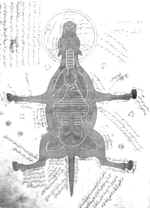
In 15th century, interest in anatomy developed and the first illustrated book, entitled "Tashrihol Abdan" or Kefayat Mansouri", was prepared by "Mansour ebne Mohammad ebne Ahmad Elias Shirazi" in 1395. In this book, Greek and Indian embryological conceptions are discussed alongside anatomical illustrations.
Between 16th and 18th century A.D., during which Safavid dynasty ruled over Iran, works of Mohammad Hosseini Nourbakhshi, Hakim Momen and Mozafar Shafai further magnified medicine.
Nourbakhshi was the first to identify "hay fever" and "whooping cough" and his book "Kholasatot Tajrobeh" was well known.
Hakin Momen Tohfeh, which includes pre-Safavid medical knowledge and experiences of the author and his contemporary masters, was still consulted in Iran.
Maybe, Safavid era could be considered the golden age of Iranian pharmacology. Mozafar Shafai, son of Mohammad Hosseini Isfahani Kashani, lived under Shah Abbas 1 and was a great physician of that epoch. In addition to several other books, he wrote his famous book "Qarabadin Shafai" in 1555 A.D., an invaluable source of pharmacological knowledge currently consulted in Iran and India.
In the course of 19th century, with gradual introduction of European medicine during Qajar period, Iranian medical community bade the ancient world farewell and with inauguration of "Darol Fonoun Polytechnic" (1850), western medicine acquired official status in Iran.
Among the founders of modern medicine in Iran, one may cite Austrian Dr. Polack, Dutch Dr. Schlimmer and Dr. Albaux, who were instructors in Darol Fonoun.
In 1855, Dr. Albaux's surgery book and Dr. Polack's book "Vazidatol Hekmat" were published. In 1862, Schlimmer books "Shafaieh" and "Serolhekmat" were lithographed with Persian titles.
"Treatise on Small-Pox Vaccination" seems to have been one of the first books printed in 1923 in Tabriz.
|
|