|
|
Among the Orang Asli or indigenous people of Peninsular Malaysia, two tribes are well-known for their remarkable wood sculptures:
Jah Hut of Temerloh area in central Pahang State
Mah Mery of Carey Island in Selangor State
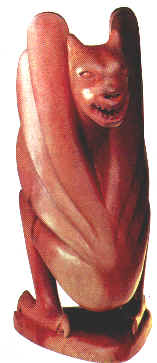
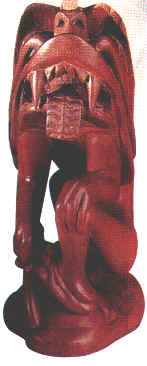
Carved by people with no formal training, these sculptures reveal the natural craftsmanship of Orang Asli carvers, and their innate understanding of wood. Astoundingly, each aboriginal wood sculpture is carved from a single piece of wood, without nails and interlocks, with some sculptures reaching up to 1.5 meters (60 in).
Jah Hut and Mah Mery carvers often draw on their ancient culture and folklore for the subject of the wood sculpture. In Orang Asli culture, earthly and heavenly phenomena are explained through "spirits" or Moyang. There are spirits of birth, death, illness, parenthood, humor, mischief, deceit, love and other emotional concepts.
Both Jah Hut and Mah Mery tribes carve elaborate figures depicting forest and household spirits, purely as art pieces and not for worship. Although some of these sculptures may appear scary, the proportion, balance and beauty of these works of aboriginal art shine through.
Jah Hut also carves animals like tiger, elephant, crocodile, leopard and monkey, and totems using hardwood from surrounding jungle.
In his boat, Mah Mery wood carver travels to the mangrove forests on Carey Island to look for Nyrih Batu, a hardwood for his wood sculptures. Being former sea-gypsies, Mah Mery carvers focus on sea-gods, dragons, crabs, night birds and fish. They also carve ritual masks, which they believe depict their ancestors, both in features and in spirit. These masks are worn in dances to celebrate the harvest festival, fruit season and weddings, as well as in healing ceremonies.
A selection of Jah Hut wood sculptures, which tend to have rough finish and those from Mah Mery, which are highly polished, are on display in:
Orang Asli Museum
24 km Jalan Pahang, Gombak, Kuala Lampur
Tel.: +60 3 6189 2122, ext. 216
|
|