|
|
Classical Dances
Indian dancing is a highly developed art of pantomime, in which the dancer is essentially a story teller. Eyes and eyebrows, hands and fingers, neck and foot, in fact the whole body, are charged with meaning.
Colorful and fascinating, it is largely religious in inspiration. Among the well-known schools of classical Indian dance is Bharat Natym, which was born and nurtured in the temples of South. It is highly stylized dance, which relates a story through a language of gesture and expression, accompanied by song. It takes about ten years of intensive training to become accomplished Bharat Natym dancer.
Kathakali is another ancient dance, born in Kerala. It is characterized by elaborate make-up and rich and elaborate costumes. Unlike Bharat Natym, Kathakali is performed almost entirely by men. The theme is usually derived from the great epic stories of Ramayana and Mahabharata, portrayed through gestures and expressions, to the accompaniment of drums and changing of songs.
Kathak, confined to Northern India, was developed under Mongol patronage from traditional form into highly sophisticated dance style. Lightening footwork and unerring rhythm are its outstanding characteristics.
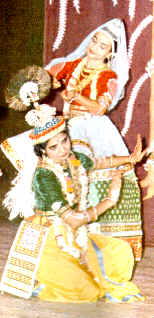
Eastern Manipuri dance is graceful, enhanced by beautiful and distinctive costumes.
Folk Dances
There is rich diversity of folk dances in India and almost every region has evolved its own style. Folk dancing is often connected with the seasons and the harvest.
Music
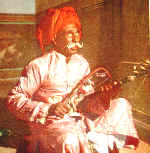
Indian Music is esoteric and perhaps, the oldest of India's art. It unfold in intricate rhythmic patterns with variations on a theme.
The base or fame for the improvisation is a "Raga". Give this scale and mood, the artist moves with ease and ingenuity that caused Yehudi Menuhin to say of Indian Music "A mathematical exercise becomes an ecstatic kind of astronomy".
|
|