|
|
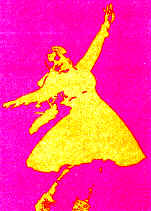
Kathak dance, belongs to Northern India, seems to have evolved from the simple, devotional, mimetic recitation of Kathakaras, who were story tellers and Rhapsodists attached to temples in Braj region.
Nevertheless Kathak as obtaining today is far different from the art it must have been in its formative years.
In its technique, Kathak gives equal importance to pure dance and to mime. And that is so, because when Mongols became the rulers of India, they took Kathak from the temple to the court; and, in the process, recast its technique to suit their aesthetic propensities.
The pure dance aspect is marked by intensive footwork and multiple gyrations of the body, while the mime concerns itself mainly with re-telling some incident in the life of Lord Krishna.
Though not so much in vogue now, Kathak also includes expressional dance done to the singing of love ditties.
Kathak, by its very nature, is essentially solo dance, and its performers are both men and women.
Birju Maharaj, Sitara Devi, Damayanti Joshi and Roshan Kumari were among the principal artists of Kathak in 1970s.
Leading centers of this art are Kathak Kendra, Delhi, bhatkhande Sangeet Vidyapith and Lucknow.
|
|