|
|
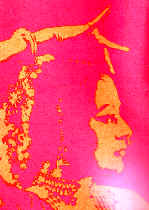
Of the various forms of classical dance in India, Bharata Natyam is believed to be the oldest, because it is the form which is based, to the larger extent, on ancient texts on the dance.
For centuries it was danced by Devadasis, or girls who had been dedicated to the temples of South India, in particular of Tamil Nadu.
It is performed solo, conventionally by women alone, and it is in essence, a dedicatory dance, intended as an offering to Gods.
It has items of pure dance, which consist of clear-cut movement and sculpturesque poses, as well as of expressional dance, to be accompaniment of songs.
The songs pertain, mostly to the theme of love, but not sensual love. They give it an elevated and somewhat spiritual flavor.
The invocatory aspect of Bharata Natym is brought home in the very first item in its repertoire, Alarippu, which is structured to give the effect of the body unfolding itself by degrees, as if in offering to God.
Other important pieces of Nritta in Bharata Natym are Jatiswaram, which presents parallel and synchronized patterns of rhythmic beats and musical notes, and Thillanas, in which varying patterns of rhythm and pose and movement are interlaced with a sequence of dance syllables, which is rendered in the form of musical refrain.
Expressional dance in Bharata Natym finds place in numbers like Sabdam, Padam and Varnam, and these for the most part use excerpts fromm classics, as well as from inspired effusions of the numerous saint singers of South India.
Among the leading exponents of Bharata Natym today are:
- Balasaraswati
- Yamini Krishnamurti
- Shanta Rao
- Indrani Rehman
- Vyjayantimala
- Kalma
- Padma Subramanyam
Its foremost center of training is Kalakshetra in Madras, while some other important institutions are Darpand, Ahmedabad, Rajarajeswari, Kala Mandir, Bombay, Triveni Kala Sangam and Delhi.
|
|