|
|
Brick and Pattern: Iranian Designs and Images
Mahmood Maheronnaqsh
1995
With all its inevitable imperfections, Brick & Pattern begins with the preliminary observation of a renewed popularity of the architectural use of bricks, in the context of which craftsmen and artists have been able to raise walls, adorned with patterns derived from their creative minds, and of the fact that these patterns are different enough from those used in the past eras, as to constitute a class of their own.
Since times immemorial, bricks have been inseparable elements of wall construction, thus acquiring a particular status in the history of architecture as the building material par excellence. Ever since they were invented in Babylon, the manufacture of bricks, whether sun-dried or fired, became current practice, developing steadfastly throughout the world.
Clay earth is available in the most regions of the planet, providing the best building material, which all of the people soon put to good use, first mixing it with water and trampling it into a uniform paste, and then molding it into rectangular blocks, which they left to dry in the sun, and later on took to kilns for firing. The hard, durable latter form could be readily used in building houses or other monuments. Thus, the most simple building materials available to rich and poor alike were none but raw bricks (Khesht) and fired ones (Ajor).
It is generally believed that the art of brick manufacture originated about 5000 BC. The inhabitants of the banks of Nile had noticed that the layer of alluvial deposits left behind every year by the tumultuous waters soon dried and cracked into large and small "cakes", about 4 to 5 centimeters thick, which could be used to construct walls. From there, thanks to the incessant eagerness of man's mind for progress and innovation, it was put a step to begin casting mud into regularly shaped molds, letting the blocks dry hard in the sun, and utilizing the resulting bricks instead. And soon again, searching means for making these more solid, cattle dung was mixed with the clay mud; later on, in order to prevent the bricks from cracking, while losing their water contents, cut straw was added, in about the same proportion as clay earth, its myriad blades acting as tiny "reinforcement rods" (the straw was first dipped in water, which softened in fibers, making the mixing process easier on skin).
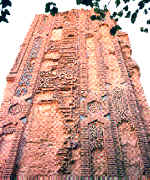
Ever since fired bricks were invented, they have constituted one of the principal building materials, which were soon used in huge quantities, in all parts of the constructions. Scholars unanimously believe that the undisputed master artisans in this field were from East. Those early architects were faced with an arduous task, when they came to adopt appropriate dimensions and proportions for the molds to be used. In other terms, this was an artistic problem, which required reflection. The alluvial "cakes" of the Nile banks had been used as such, roughly stacked atop one another, whereas in making bricks, whether raw or baked, thought was to be given to the proper alignment and interlocking of individual bricks, to their resistance under load, etc. The best model adopted was the cubic two-widths-long, which has made in various sizes all over the world. With such proportions, bricks could be laid to overlap by half of their length. As for their thickness, this varied in the course of time. At first, bricks tended to the quite large, and proportionally very thick, but gradually thinner bricks appeared. These were in turn subdivided into various fragments, each bearing a name of its own, itself varying from region to region. Moreover, for want of widespread literacy, these appellations were propagated orally, undergoing inevitable alterations in different regions. Eventually, they were transmitted from bosom to bosom, from generation to generation, and it was only when the cultures of various countries could be recorded in written form that they became uniformly standardized.
Although building was crude, primitive activity in ancient times, the advent of bricks compelled men to think better, and build better, taking advantage of the breakthrough the new material made possible. as soon as fired bricks were produced, providing unprecedented solidity, master builders at large began experimenting with their possibilities.
Iranian architects also made the best use of them. In Susa (Shush), the prosperous capital of Elamites, brick architecture soon prevailed. The archeological excavations made on this pre-historic site have uncovered illustrated ceramic ware, which speak to the long-lasting importance of the region, as well as clay tablets dating back to 1700 BC, which include various documents and contracts.
Darius the Great, from Achaemenian dynasty, had the Palace of Susa erected in 494 BC. This brick monument was an expression of the great civilization, which had arisen in western Iran and transfigured the country. Thus it appears that, throughout the world, bricks have long formed the base of every building, of all its fabulous contents.
Situated in semi-tropical region, with average temperature around 40 degrees Celsius, Iran nevertheless displays sharp variations of temperature between its northern and southern regions, and therefore building materials have to be chosen in accordance with the local climate.
An unfortunate trend of facing buildings with stone slabs became popular all over Iran for a while, regardless of their low resistance to temperature variations, which caused them to rapidly burning hot in summer and freezing cold in winter. Used empirically, with low level of technical know-how, these proved unfit for the purpose.
Meanwhile, relying on the progress of technology, manufacturers active in various fields began experimenting with all source of natural and synthetic materials with which to face buildings. But their products, notwithstanding the propaganda campaigns which accompanied them, failed to yield good results and were soon abandoned. And yet again bricks, the traditional building material of every land, replaced them all.
Thus, after a while, a renewed interest in bricks appeared, but this time, the artists' tastes had evolved. Brick facades proliferated in various cities, and architects were able to give vent to their creativity in decorating interior and exterior of the buildings with this material. 122 pictures, an anthology of traditional and contemporary brick compositions is presented here.
Since times immemorial, bricks have essentially been molded blocks of clay earth mixed with water and eventually hardened by the fire. But, the evolution of this process varied from country to country. In Iran, bricked were first baked in cylindrical pit kilns, which were soon replaced by tunnel kilns. These remained in use until the advent of modern technology, when all kinds of quite different baking methods are used.
It is also notable that, relying on advanced chemical technologies, efforts are being made for producing bricks of desired colors, which also be more solid as well as resistant to corrosion.
An anthology of traditional and contemporary brick compositions
122 Pictures of Brick Designs:
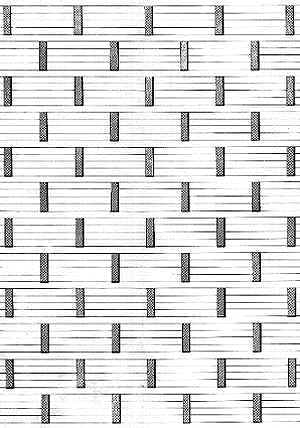 Tak-Rasteh
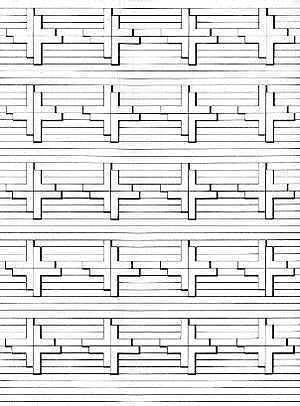 Gole-e Posht-be-Posht
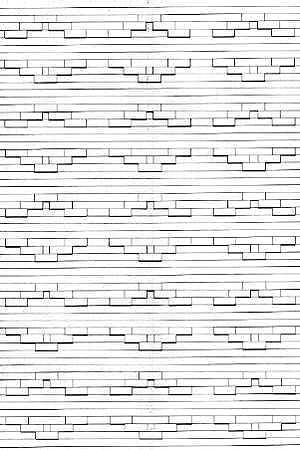 Pelle'i Rasteh-dar
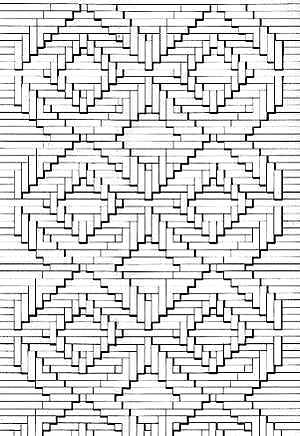 Khofteh-o-Rasteye Shamseh-dar
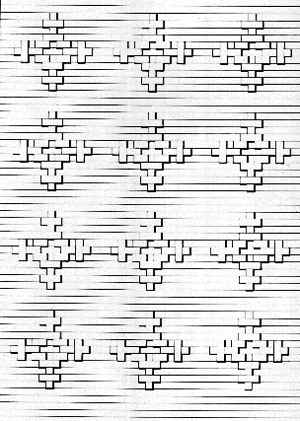 Gol-e No-e 4-Bakhshi
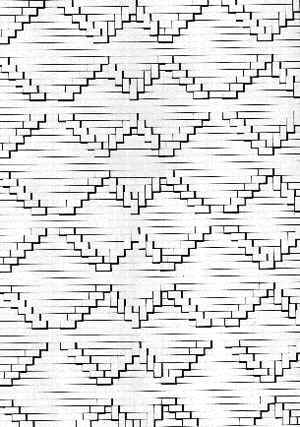 Tabl-e Va-Rafteh
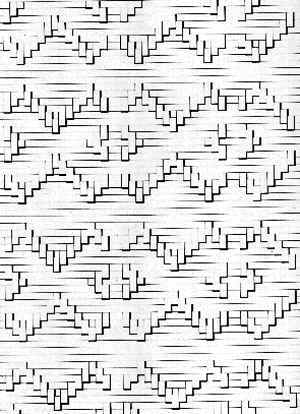 Tabl-e Modakhel-dar
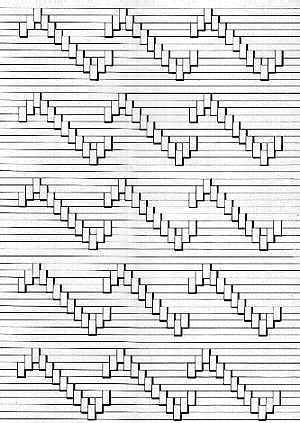 Modakhel-e Zanjire'i
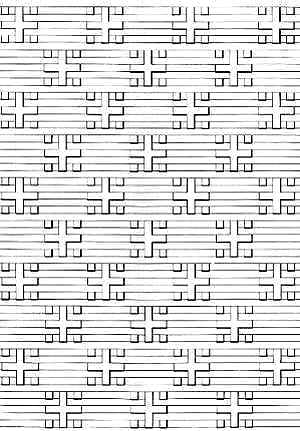 Moraba' dar Moraba' Kalook-dar
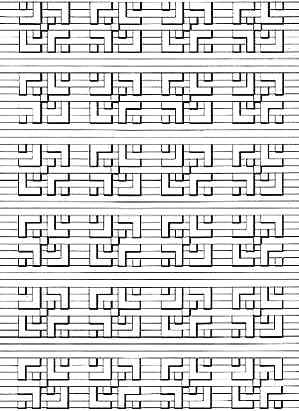 Glo-e Zanjire'i Moraba'
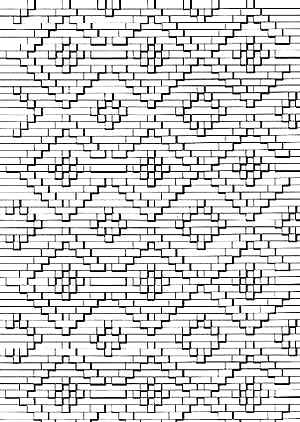 Tabl-e Jerzi
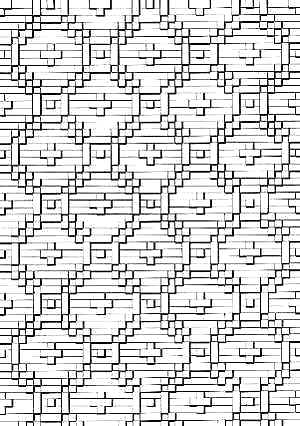 Shamseh-o-Moraba'
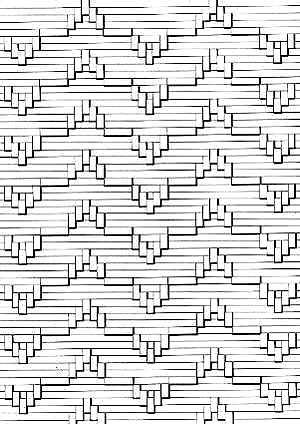 Modakhel-e Raft-o-Bargasht
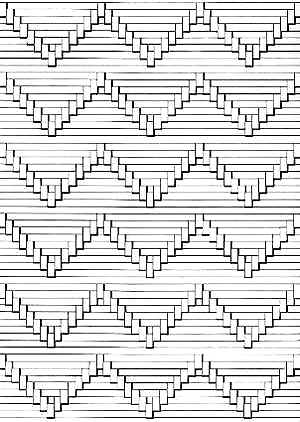 Shebh-e Jo'ak
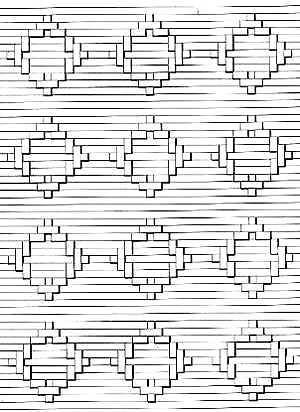 Shamse-ye Rasteh-dar
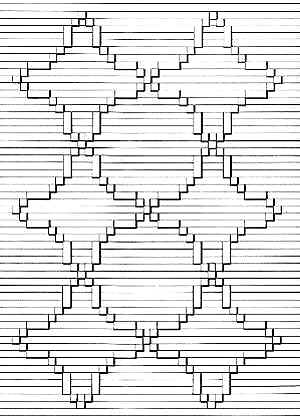 4-Seli-e Shamseh-dar
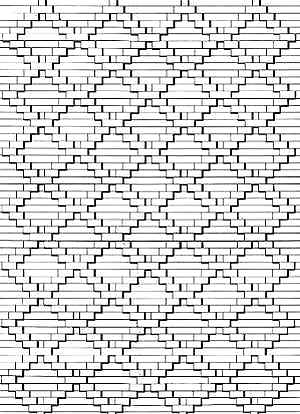 Gol-e Zanjire'i
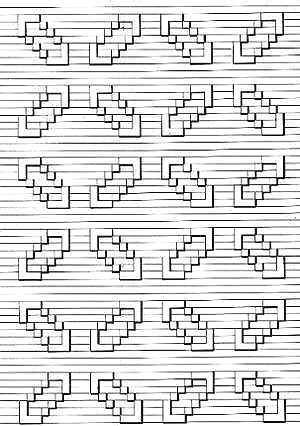 Sel-e Moraba' Qenas
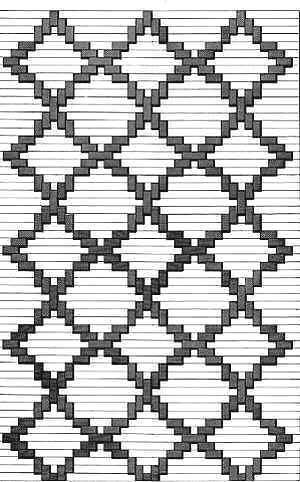 Shamseh dar Shamseh
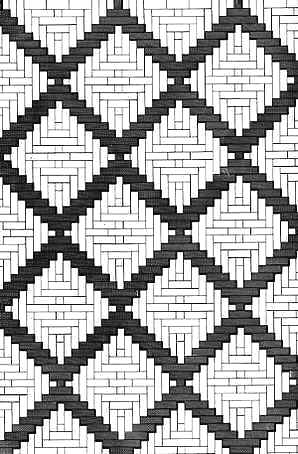 Khofteh-o-Raste-ye Zanjire'i
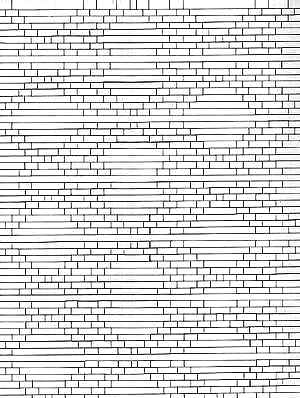 Tabl-o-Moraba'
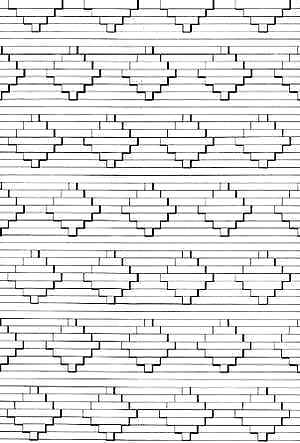 Gol-e No-e Sadeh
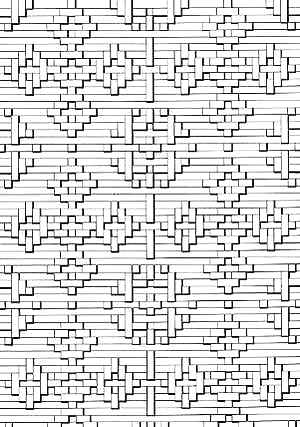 Gol-e No-e dar-ham
Click here to visit more Pictures of Brick Designs
|
|